
Living and Studying in Luxembourg
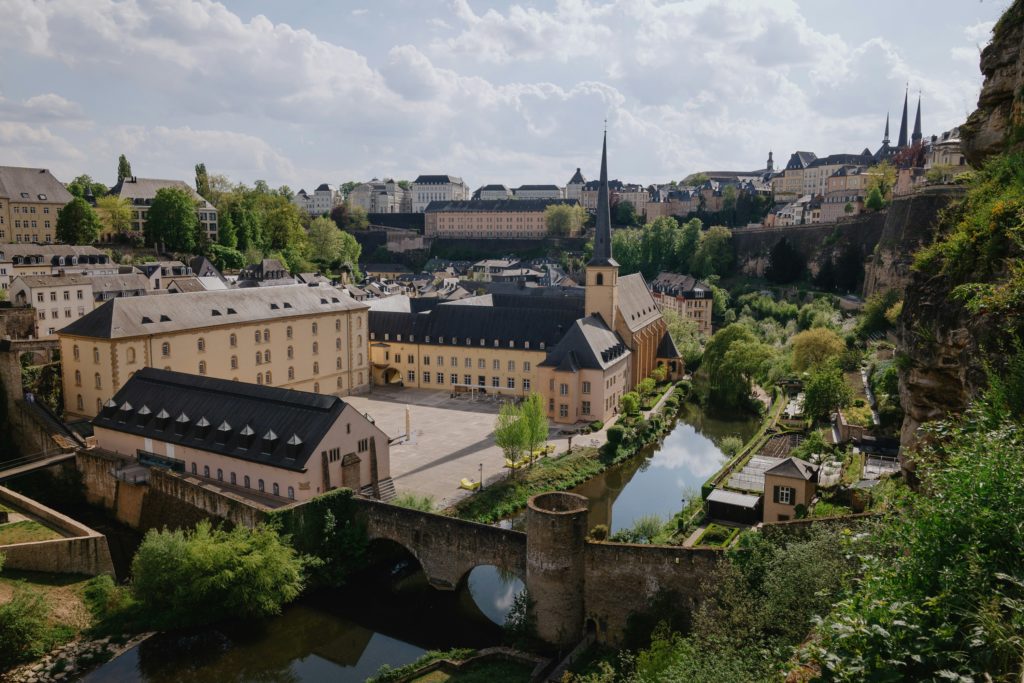
Luxembourg, officially the Grand Duchy of Luxembourg, is a small landlocked country in Western Europe. It borders Belgium to the west and north, Germany to the east, and France to the south. Its capital and most populous city, Luxembourg, is one of the four institutional seats of the European Union (together with Brussels, Frankfurt, and Strasbourg) and the seat of several EU institutions, notably the Court of Justice of the European Union, the highest judicial authority. Luxembourg’s culture, people, and languages are highly intertwined with its French and German neighbors; while Luxembourgish is legally the only national language of the Luxembourgish people, French and German are also used in administrative and judicial matters and all three are considered administrative languages of the country.
Covering an area of 2,586 square kilometres (998 sq mi), Luxembourg is the seventh-smallest country in Europe. In 2025, its population stood at 681,973, making it one of the least-populated countries on the continent, though it also has the highest population growth rate. Nearly half of the population are foreign nationals. Luxembourg is a representative democracy led by a constitutional monarch, Grand Duke Guillaume, and is the world’s only remaining sovereign grand duchy.
Luxembourg is a developed country with an advanced economy and one of the world’s highest GDP (PPP) per capita. The city of Luxembourg was declared a UNESCO World Heritage Site in 1994 due to the exceptional preservation of the vast fortifications and historic quarters.
Luxembourg is a founding member of the European Union, OECD, the United Nations, NATO, and the Benelux. It served on the United Nations Security Council for the first time in 2013 and 2014. As of 2022, Luxembourg citizens had visa-free or visa-on-arrival access to 189 countries and territories, ranking the Luxembourgish passport fourth in the world, tied with Finland and Italy.
Welcome to the University of Luxembourg!

The University of Luxembourg is the sole university in the country. Founded in 2003, the University of Luxembourg (UL) is a young, research-driven institution with 7,200 students and more than 1,100 PhD candidates. It embraces interdisciplinarity in research and learning to address future societal needs. Rooted in Luxembourg’s diverse and multicultural society, the University brings together bright minds from around the world in a welcoming, multilingual, and collaborative community. Its internationally recognised research drives innovation in digital transformation, health, and sustainable development. Ranked among the world’s top 250 universities by Times Higher Education, the University of Luxembourg proudly joined The Guild of European Research-Intensive Universities in 2025.
The UL benefits from its close location to – and collaboration with – European institutions, a strong financial industry and leading players in manufacturing. This ecosystem of neighbouring industrial, institutional and political agencies, together with the different actors of public research, makes Luxembourg a vibrant and attractive place to excel in research and innovation.
The booming “Cité des Sciences” campus in the south of the country combines, on an emblematic site, past industry glory and the modern knowledge society and has become a landmark in the country. As an example, the brand-new Learning Centre of the University of Luxembourg is much more than a library, but combines modern digital tools with traditional learning methods. It symbolises the ambition of the University of Luxembourg.
The UL comprises three faculties, organised in departments, embracing disciplines ranging from law, finance, social sciences and humanities to natural sciences, engineering sciences and technology and medicine. This academic breath is reinforced by five large Interdisciplinary Research Centres: the Luxembourg Centre for Security, Reliability and Trust (SnT), the Luxembourg Centre for Systems Biomedicine (LCSB), the Luxembourg Centre for Contemporary and Digital History (C²DH), the Luxembourg Centre for European Law (LCEL) and the Luxembourg Centre for Socio-Environmental Systems (LCSES).
The University offers 24 Bachelor’s, 51 Master’s degrees, 18 lifelong learning courses and vocational training opportunities, 3 courses for Specialised Studies Diplomas. Small classes ensure direct interaction between students and teaching staff. Teaching at the University of Luxembourg is multilingual. The university offers 58 bilingual and multilingual degree programmes, taught in 4 different languages. Doctoral education is organised in 4 doctoral schools offering all together 13 doctoral programmes, courses in disciplinary and transferable skills:
- Doctoral School in Science and Engineering (DSSE)
- Doctoral School of Law (DSL)
- Doctoral School in Economics, Finance and Management (DSEFM)
- Doctoral School in Humanities and Social Sciences (DSHSS)
It is one of UL’s distinctive flavours to be worldwide one of the most international universities with a unique multilingual and multicultural character. With 60% international students from abroad, the campus brings together students and professors representing 150 countries. UL considers this diversity as a major strength and attractiveness of the University!
Various sites of the University
Belval Campus
- Rectorate & central administration
- Faculty of Science, Technology and Medicine
- Department of Computer Science
- Department of Engineering
- Department of Mathematics
- Department of Life Sciences and Medicine
- Laboratory for Photovoltaics
- Doctoral School in Science and Engineering (DSSE)
- Faculty of Humanities, Education and Social Sciences
- Interdisciplinary Centre for Security, Reliability and Trust (SnT) – NetLab, CritiX, APSIA and CryptoLux Research Groups
- Luxembourg Centre for Systems Biomedicine (LCSB)
- Luxembourg Centre for Contemporary and Digital History (C²DH)
- Luxembourg Centre for Socio-Environmental Systems (LCSES)
- University of Luxembourg Incubator
Limpertsberg Campus
- Faculty of Science, Technology and Medicine
- Department of Physics and Materials Science
Kirchberg Campus
- Faculty of Science, Technology and Medicine
- Department of Engineering
- Faculty of Law, Economics and Finance
- Department of Finance
- Department of Finance FinTech team in the JFK building
- Department of Economics and Management
- Luxembourg Centre for Logistics and Supply Chain Management (LCL)
- Interdisciplinary Centre for Security, Reliability and Trust (SnT) – Headquarters, administration, SiGCom, SVV, SEDAN, SerVal and Automation & Robotics research groups in the JFK Building
Weicker Building
- Faculty of Law, Economics and Finance
- Dean’s Office
- Department of Law
- Luxembourg Centre for European Law (LCEL)